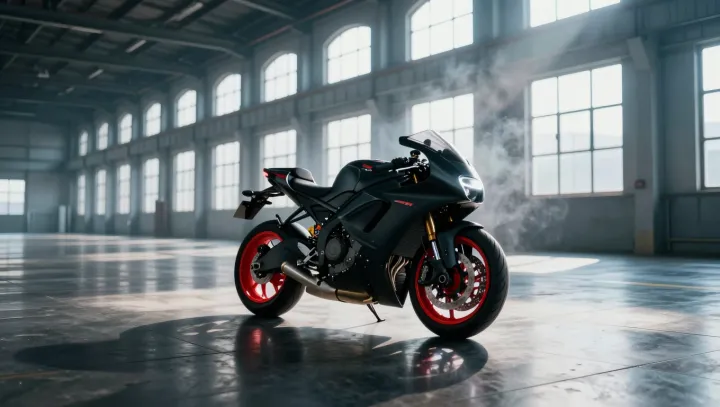
A 200 kg motorcycle can beat many 1,500 kg cars to the next traffic light while using less than half their engine power. The core reason is not raw horsepower. It is how that power interacts with mass, gearing, and friction at the contact patch.
The key metric is power-to-weight ratio, a direct lever on longitudinal acceleration in Newtonian mechanics. A middleweight motorcycle can deliver similar peak power to entry cars while pushing only a fraction of the mass, so each kilowatt does more work per kilogram. Lower moments of inertia in the wheels and crankshaft also mean less energy is lost to spinning components, improving how fast engine torque translates into angular acceleration at the rear wheel.
Motorcycles typically use shorter overall gearing and a more direct drivetrain, which reduces parasitic drivetrain losses compared with multi-gear automotive transmissions and differentials. With weight concentrated over the rear wheel under hard throttle, the normal force at that tire rises, increasing the frictional limit for traction before slip. The actual constraint becomes wheel lift rather than tire spin, so available torque is used more effectively for forward acceleration.