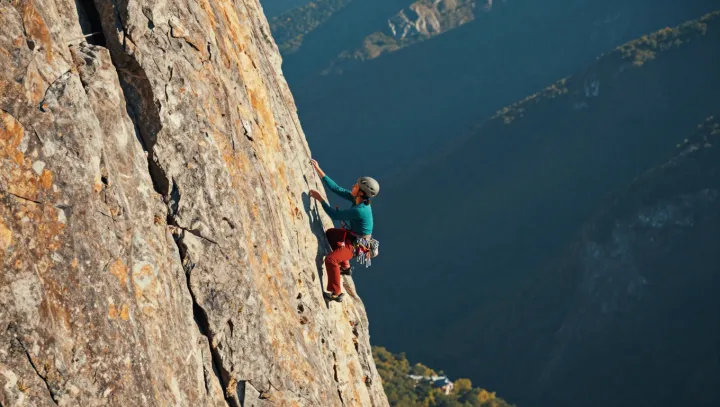
A shallow rock edge, barely deeper than a fingernail, often carries the full body mass of an elite climber without tearing skin or slipping. That scene rests on a delicate negotiation between the physics of friction and the biology of soft tissue, both operating close to their failure thresholds.
Fingertip skin offers limited shear strength and friction coefficient, so climbers quietly reengineer the contact patch. By crimping or half–crimping, they change contact mechanics, concentrating force on the distal phalanx while recruiting flexor tendons and the annular pulleys as primary load bearers. The skin becomes a compliant interface rather than the main structural element, with collagen fibers and subcutaneous tissue distributing stress away from the surface layer that would otherwise rupture.
Moisture and temperature regulation add another layer of control. Chalk shifts the friction regime by drying sweat, preventing a transition to lubricated sliding. Slight adjustments of joint angle alter normal force and shear force, keeping the ratio within the static friction window. At the same time, proprioception and fine motor control in the forearm and intrinsic hand muscles run a continuous feedback loop, like a sensor network tied to real‑time optimization of load distribution. Motor units fire in patterns that damp sudden force spikes, reducing peak stress that could exceed the tensile limit of the epidermis.
Training then pushes the whole system toward a new operating point. Progressive hangboard protocols increase tendon stiffness and cross‑sectional area, shifting the load‑bearing capacity of the musculoskeletal system while connective tissue adapts through mechanotransduction. Skin thickens through controlled microtrauma, creating callus that raises local failure thresholds without fully sacrificing tactile sensitivity. The result is not a magical grip but a carefully tuned balance of friction, tissue mechanics and neural control that allows a human body to trust a few millimeters of rock.