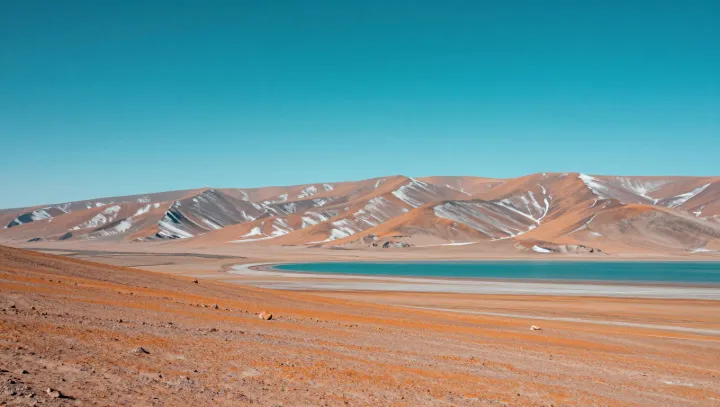
Dust hangs motionless over salt crust and bleached boulders in Chile’s Atacama Desert, a landscape so dry that some regions record no rain across human memory. This extreme, stable aridity has turned a remote stretch of Earth into one of the most valuable off-world proving grounds for machines and instruments designed to operate on Mars and even on the Moon.
For engineers and scientists, Atacama functions as a planetary analog: its hyperarid climate, intense ultraviolet radiation and oxidizing soil chemistry echo key constraints of the Martian surface. Instruments that search for trace organic molecules must work against background levels of perchlorates and nitrates, mirroring Martian regolith. Tests of rover mobility systems in loose, cemented dust help validate traction models and thermal management strategies before hardware faces launch costs and communication delays.
The desert also sharpens questions in astrobiology and planetary protection. Microbes that endure Atacama’s desiccation and high radiation dose push the limits of known extremophile survival, informing calculations of entropy and boundary conditions for life on other worlds. By forcing life-detection payloads to distinguish between genuine biosignatures and abiotic false positives, the site reduces the risk of misinterpretation when similar datasets arrive from a distant crater or a permanently shadowed lunar valley.