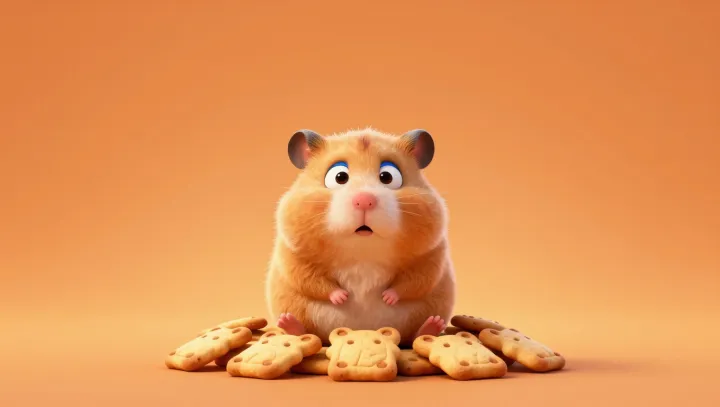
Bright animal crackers on a plate do more than entertain; they rewrite how the brain tallies sugar and calories. When snacks look playful and harmless, the visual signal reaches reward circuits in the limbic system before any nutrition label is processed, shaping judgment long before conscious restraint shows up.
Research on sensory marketing shows that saturated colors and rounded, cartoon shapes activate the dopaminergic reward system and lower perceived risk. In that state, the prefrontal cortex, which handles impulse control and portion evaluation, tends to downplay calorie density. The result is a classic case of portion distortion: the same amount of sugar is encoded as a lighter, more acceptable load simply because it arrives in the form of a smiling lion or dancing elephant.
Behavioral economists would call this a framing effect layered on top of hedonic hunger. The cute form acts as a halo that biases estimation of both sucrose content and total energy intake, despite no change in actual macronutrient profile or basal metabolic rate demands. By clustering multiple tiny, friendly shapes in one serving, the snack encourages continuous grazing; each bite feels negligible, while cumulative glucose and calorie intake quietly climbs under the cover of play.