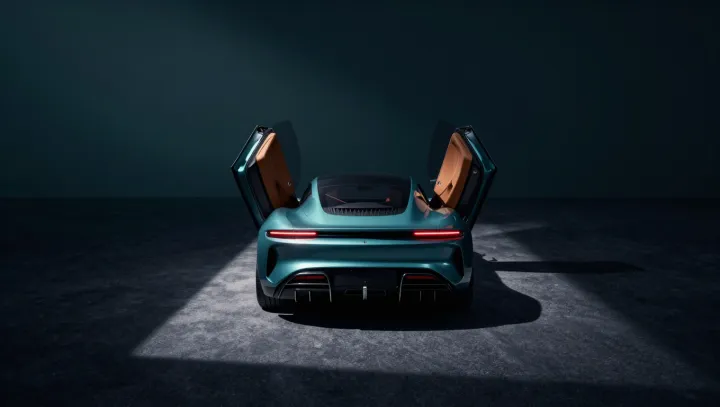
A modern car dashboard hides a quiet paradox: chips that could render a 3D game are busy timing microscopic bursts of fuel. What looks like overkill is really a response to how tightly regulated, interconnected and software driven vehicles have become, from combustion control to driver assistance.
At the core sits the engine control unit, orchestrating fuel injection, ignition timing and turbo management in real time. It must reconcile airflow models, knock detection, exhaust gas recirculation and emissions aftertreatment while meeting strict limits on particulate matter and nitrogen oxides. That means solving complex control equations many times per second, with deterministic latency and redundancy, even as the driver changes load and speed unpredictably.
Around that core, dozens of modules stream data from cameras, radar, lidar and inertial sensors. Advanced driver assistance and emerging autonomous functions rely on sensor fusion, probabilistic mapping and path planning, all rooted in algorithms that push memory bandwidth and floating point throughput. Infotainment systems add graphics pipelines, connectivity stacks and encryption workloads, turning the car into a rolling edge server.
The result is a consolidation trend: instead of scattered low power controllers, automakers deploy high performance system on chips that can host multiple virtual machines, safety islands and over the air update frameworks. The excess headroom that makes a chip capable of running a game is less about entertainment, and more about securing a long software life cycle in a vehicle that must operate reliably for years under strict functional safety standards.