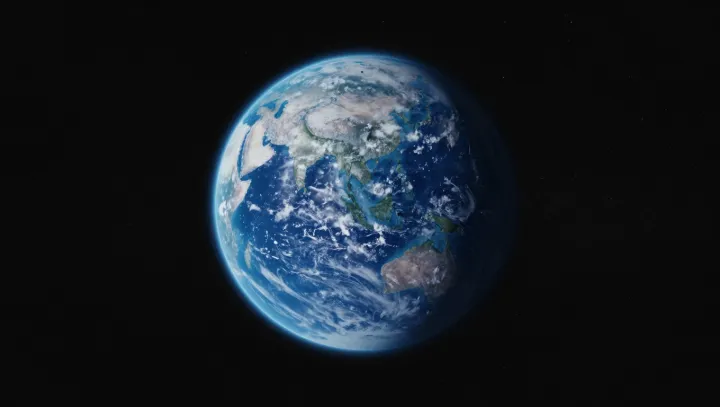
Few planets look less special than Earth when seen as a blue disk, yet that unremarkable view hides an extreme rarity: liquid oceans sitting on a crust that constantly shifts. Under that calm surface, ocean water seeps into oceanic lithosphere, chills basalt, and primes the rock for subduction, while continents ride above this slow conveyor.
The real surprise is that this restless crust operates like climate control. As tectonic plates dive, carbon-bearing sediments and altered oceanic crust are dragged into the mantle, where decarbonation reactions and partial melting feed volcanic arcs that vent carbon dioxide back to the air. Short sentence. Silicate weathering on exposed continents then pulls that gas down again, locking it into carbonates that return to the trenches.
What emerges is not stability by accident but a feedback loop. When the planet warms, higher temperatures and stronger rainfall accelerate chemical weathering of silicate minerals, drawing down atmospheric carbon dioxide and cooling the surface; when it chills, the reaction rates slow, volcanic outgassing dominates, and greenhouse warming rebuilds. On worlds without both deep oceans and active plates, carbon can freeze into rock or remain in the sky unchecked, but on Earth the partnership between hydrosphere and tectonic engine keeps liquid water, and life, in play.