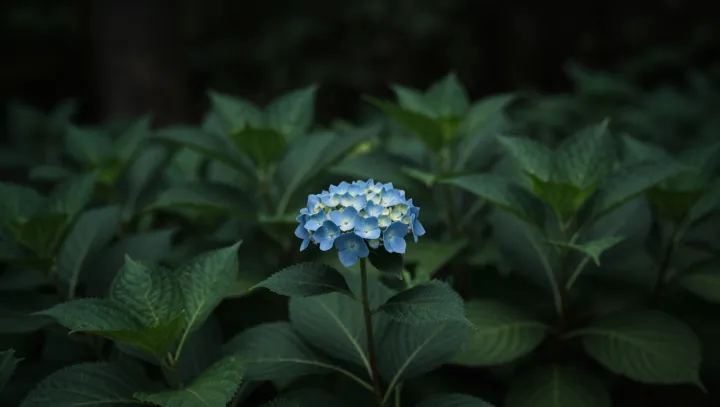
Blue petals do not signal fragility here; they advertise a metal management system that would wreck most plants. In acidic soil, aluminum becomes soluble as Al3+, a form that usually damages cell membranes and disrupts enzyme activity. Hydrangea roots instead capture it on purpose, using negatively charged pectins in the apoplast to slow its entry and keep its concentration controlled rather than lethal.
The real trick is not avoidance but choreography. Once bound at the root surface, aluminum is chelated by organic acids such as citrate, forming stable Al–citrate complexes that move through the xylem without spiking free ion levels. In sepal cells, aluminum is handed off again, this time to anthocyanins and co‑pigments inside the vacuole, creating metal–anthocyanin complexes that shift petal hue toward blue at low pH while remaining locked away from sensitive cellular machinery.
Color, then, is a side effect of recycling. As flowers age or soil conditions change, those complexes can be disassembled, with aluminum re‑sequestered in cell walls or vacuoles and reused rather than discarded. No external fertilizer is required for the swing toward pink once availability drops; the same ion, routed through different binding partners and micro‑pH niches, drives the reversible palette that turns a toxin into a reusable pigment cofactor.