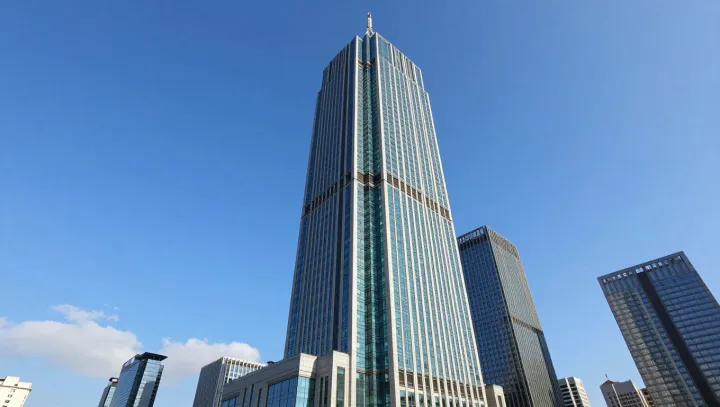
A slight shudder at the top of a tower is not a flaw; it is the safety system made visible. Under heavy wind, some super‑tall buildings are engineered to move by roughly half a meter, a range that keeps steel and concrete working within their elastic limits while avoiding the brittle behavior that can trigger cracking or connection failure.
Engineers argue that a perfectly rigid skyscraper would be dangerous, not heroic. Wind load increases rapidly with height, and a fixed, unyielding frame would concentrate stress at joints and cores, raising the risk of fatigue and local buckling. By allowing controlled lateral drift, designers spread that energy across the structure, using material ductility, moment frames and shear walls to absorb and release it like a spring rather than a stone.
The most counterintuitive detail is that extra machinery often makes the motion feel smaller. Many towers hide a tuned mass damper: a huge pendulum or sliding block whose natural frequency is calibrated to the building. When the tower sways, this mass moves out of phase, using inertia and energy dissipation through viscous dampers or friction devices to cut peak accelerations that cause nausea even when stresses stay low. Slight, calculated movement keeps both the skeleton and the people inside within safe limits.