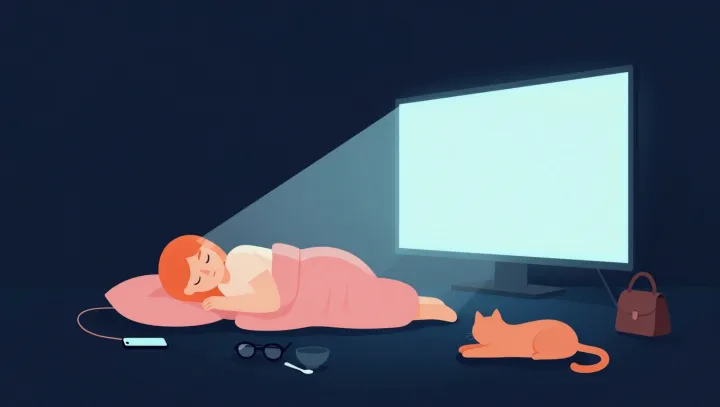
Blue light gets too much blame. The harder problem hides deeper in the brain’s timing system, where the suprachiasmatic nucleus keeps running a schedule that does not care about your latest productivity hack or digital detox trend.
The unpopular truth is that quitting the phone before bed, on its own, barely moves the needle for many people. Sleep pressure and the circadian rhythm are the real operators; they rely on consistent cues like light exposure at morning wake time, stable bedtimes, and regular meal timing to coordinate melatonin secretion and core body temperature cycles. Remove the phone but keep random nights of streaming, late social plans, and shifting alarms, and the internal clock keeps drifting, so the brain still does not release sleep signals when you want them.
A stronger claim follows from that physiology. The most effective “digital curfew” is useless without boring regularity in sleep and wake times, maintained even on weekends, which trains the suprachiasmatic nucleus through repeated light cues and anchors homeostatic sleep drive. People who standardize their schedule often fall asleep faster even with some evening screen exposure, while those who only ban devices can stay wired in a dark, silent room. The brain, in other words, obeys its clock, not your willpower against a glowing rectangle.