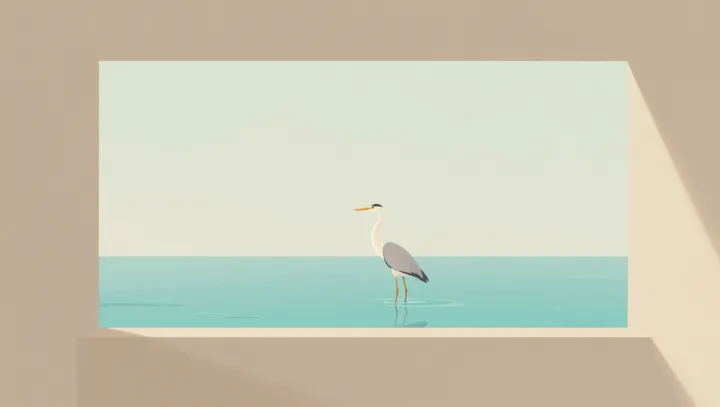
That lopsided bird on your page is a quiet accusation against your own brain. Not of failure. Of efficiency. What you draw is not a specimen from the sky; it is a specimen from your internal model, sculpted by the visual cortex and pruned by the hippocampus into something storage-friendly and fast to retrieve.
Memory, in this view, behaves less like an archive and more like lossy compression in signal processing. Details with low predictive value are discarded, while a generic beak, oval body, and stick legs survive as a kind of semantic average. Neuroscientists call this statistical shortcut a prototype representation, a shorthand template built from many similar encounters that overwrites rare quirks, odd wing angles, or unfamiliar plumage.
Even stranger is how your sketch reveals the brain’s obsession with prediction error. When you draw, top‑down expectations from higher visual areas flood early sensory circuits, filling gaps where no current input exists. The result is a bird tuned to what your system expects to see, not to what any ornithologist would catalog. On the page sits a small audit of how far your private version of reality has drifted from the world outside.