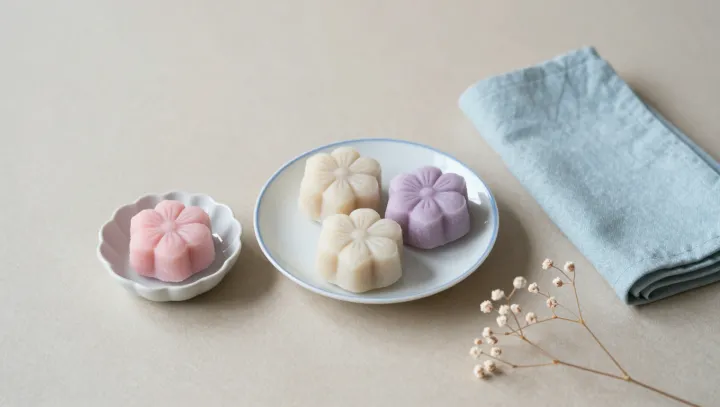
Softly lit pastel flower sweets do something bold before they touch the tongue. Their color gradients, rounded contours and orderly spacing present the nervous system with a low-threat visual field, one that lab studies show can increase parasympathetic activity and nudge heart rate variability in a calmer direction within seconds.
The odd claim here is that the plate, not the sugar, is the first sedative. Visual cortex and amygdala process those gentle hues and petal-like shapes faster than any conscious thought, feeding into autonomic circuits that govern cortisol release and sympathetic arousal. When the scene signals safety and abundance rather than scarcity or chaos, the hypothalamic–pituitary–adrenal axis has less reason to flood the bloodstream with stress hormones, so the body quietly stands down.
Equally underestimated is the choreography of stillness. A single, centered confection on matte porcelain slows the eye’s saccades, which research links to reduced cognitive load and lower galvanic skin response. Add the ritualised pause before eating and the brain begins predictive coding: it tags the moment as controlled, aesthetic, almost ceremonial. That expectation recruits prefrontal regulation over limbic fire, so by the time the first bite arrives, physiology has already shifted from fight-or-flight toward rest-and-digest, all triggered by a small, pastel arrangement on a silent plate.