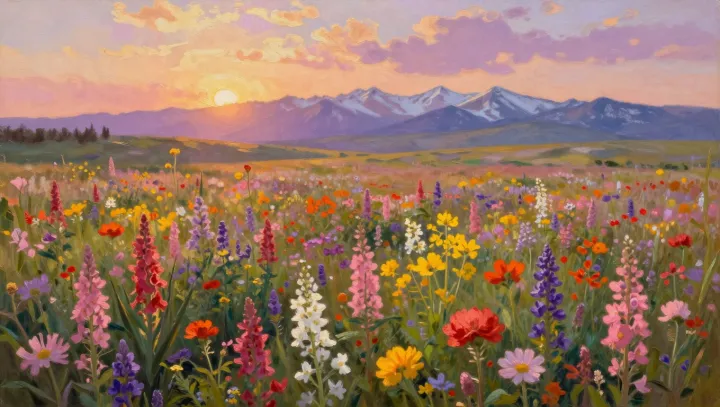
The sky is often lying to you. In many mountain scenes on canvas, painters deliberately drain intensity from the sky while igniting color in the foreground, because raw realism is a poor negotiator with your visual cortex.
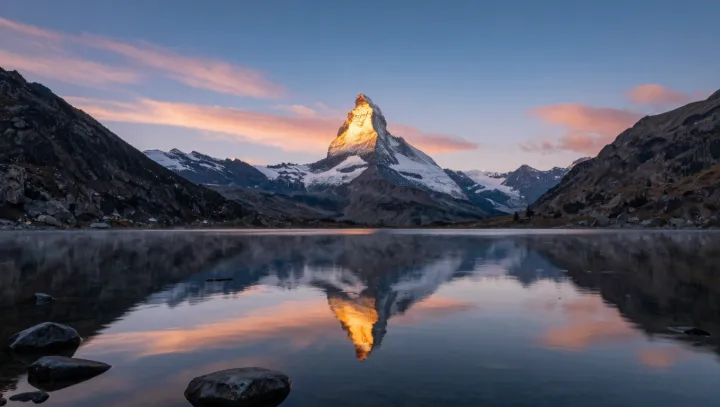
What the eye really trusts is contrast, not honesty. By muting blues above and softening distant ridges through atmospheric perspective and Rayleigh scattering, artists exaggerate what optics already start: air particles scatter short wavelengths, reducing saturation and local contrast with distance, so the brain tags far zones as hazy and less important.
Yet memory does the opposite of the air. To make peaks feel hyper-real in recall, painters push bold, warm hues and hard edges into the foreground, then frame the mountains against a calmer, low-noise sky. This exploits lateral inhibition and figure–ground segregation: high-contrast foreground elements act like a reverse spotlight, forcing the cortex to carve a crisp contour where muted sky meets jagged ridge.
So the mountains feel sharper not because they are painted louder, but because everything around them is tactically quieted. Your brain fills the silence with certainty.