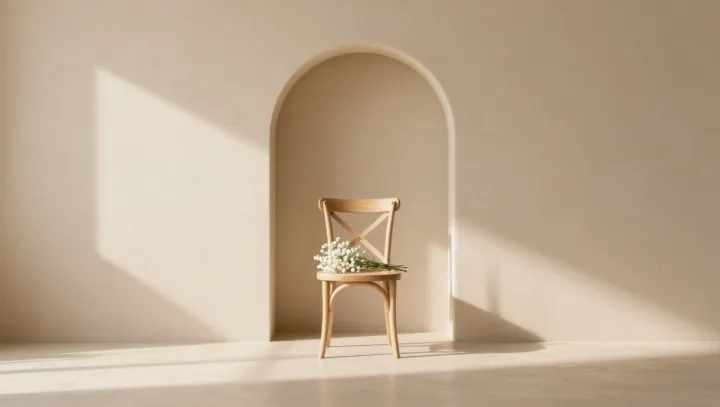
A stack of books, a pale stone, a few dried grasses on a blank surface can quiet a room faster than any scented candle. That calm, research suggests, is not mystical at all but mechanical: the scene starves the visual cortex of work. With only a handful of objects, low color variance, and long, clean contours, the image slashes what scientists call edge density and object segmentation demands.
The striking claim from visual neuroscience is that comfort arrives when prediction error drops. In minimalist still lifes, the brain’s hierarchical processing stream, from retina to primary visual cortex to higher ventral areas, encounters patterns it can model with almost no updating. Fewer chromatic channels fire, fewer saccades are triggered, and metabolic demand in regions such as V1 and V4 falls, measurable through reduced blood‑oxygen‑level dependent signal in imaging studies.
Calm, then, is partly an energy budget story. Where cluttered scenes bombard receptive fields with competing edges and textures, forcing constant figure–ground segregation and heavy feedback loops, a spare composition lets the system idle. Autonomic arousal tracks this shift: heart rate variability rises, skin conductance steadies. The mind reads the still life as safe territory, and the body quietly agrees.