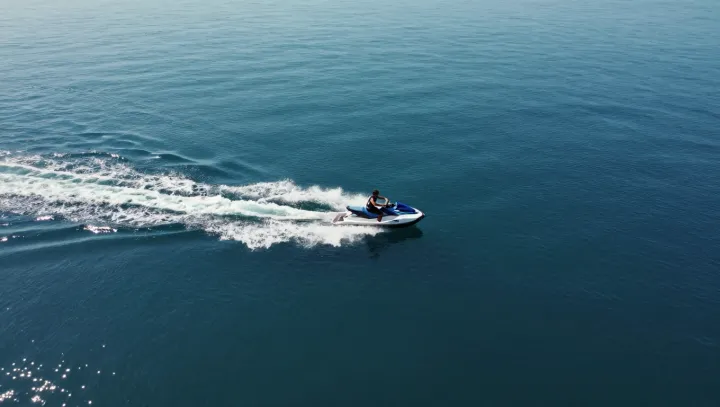
Glassy water does not relax elite jet ski riders; it exposes them. On a mirror‑flat bay, the machine leans, hums, and carves the same slow, tight crescent again and again, a pattern so repetitive it looks like boredom from shore yet functions as a laboratory for balance at the threshold of motion.
The hard truth is that high‑speed mastery starts insultingly slow. By creeping through those compressed arcs, riders force the vestibular system and proprioceptive feedback loops to work without the stabilizing crutch of momentum, so every minor roll, yaw, and throttle input becomes a clean data point for the brain’s internal forward model of the body‑machine system.
Speed, by contrast, is a flattering liar. Once the hull planes, hydrodynamic lift masks sloppy micro‑corrections, and centrifugal force can hide timing errors that would have dumped the rider at five knots, which is why coaches treat low‑speed drills as a form of constraints‑led practice, stripping away noise until neural circuitry learns to predict balance shifts a fraction before they occur.
What looks from a distance like a rider circling without purpose is, up close, a quiet arms race between nervous system and water, with every slow carve laying down myelin and habit so that when the throttle finally opens, reaction feels like instinct rather than luck.