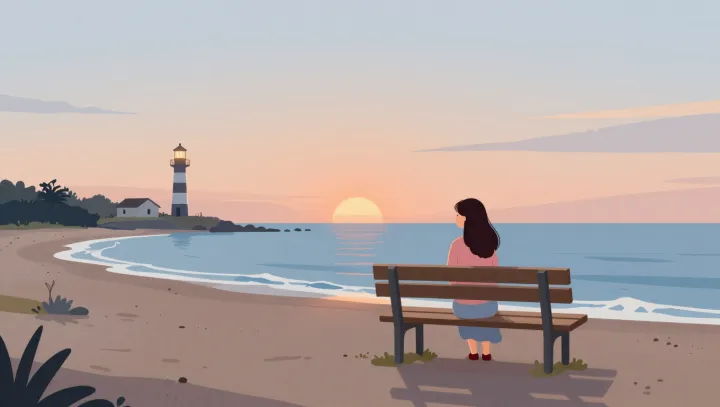
The sea at dusk does something most luxury trips fail to do. It repeats. The same horizon, the same light fading, the same slow drop of the sun. That monotony, far from boring the brain, trains it. With every near-identical sunset, sensory input becomes predictable, and the stress machinery in the amygdala has less reason to fire.
Big vacations promise relief but often behave like a spike in a data set, not a trend. Novelty floods the system with cortisol and dopamine, then ends. Neural pathways barely have time to shift. By contrast, regular sunsets act like low-dose exposure therapy, a concept well known in behavioral medicine. The brain learns that this set of cues – salt air, orange light, wave noise – reliably coincides with safety, not threat.
More quietly radical is what happens in the body. Repetition strengthens parasympathetic activation and vagal tone, textbook regulators of heart rate variability and inflammatory signaling. Sit there often enough and your autonomic nervous system starts to anticipate the routine, pre-loading relaxation before the sky even changes. Over time, synaptic plasticity locks that pattern in, so the mere memory of that shoreline can downshift stress responses, long after the last streak of color has disappeared.