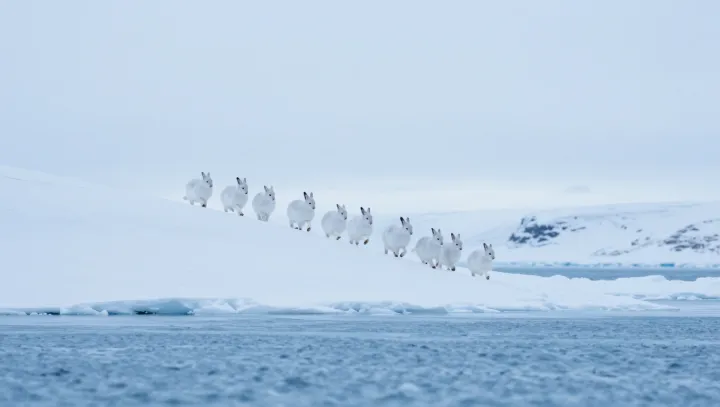
Arctic ice should stop a hare cold. Instead, the animal treats it like a racetrack, its hind legs firing in bursts that look reckless until the underlying anatomy comes into focus. Each foot is a dense mat of fur and subcutaneous fat, a built-in snowshoe that spreads weight, cuts pressure on sharp ice ridges and traps a thin layer of insulating air against the surface.
The real trick, though, is in the plumbing. Running against the bones of each limb are paired arteries and veins that set up countercurrent heat exchange, so warm blood descending from the core preheats the colder blood returning from the toes and limits total heat loss. That arrangement cools the extremity just enough to reduce the temperature gradient with the ice, while still keeping tissue above the threshold that would trigger frostbite or ice crystal formation.
Speed itself becomes a thermal asset. High-intensity sprinting cranks up skeletal muscle metabolism, flooding the body with heat that must be dumped somewhere; the feet act as controllable radiators, their blood flow adjusted by vasoconstriction or vasodilation under autonomic control. Add thick keratinized pads and claw tips that bite into wind-scoured surfaces, and the hare can hammer across frozen ground at predator-beating speeds, its feet functioning as both crampons and compact heaters.