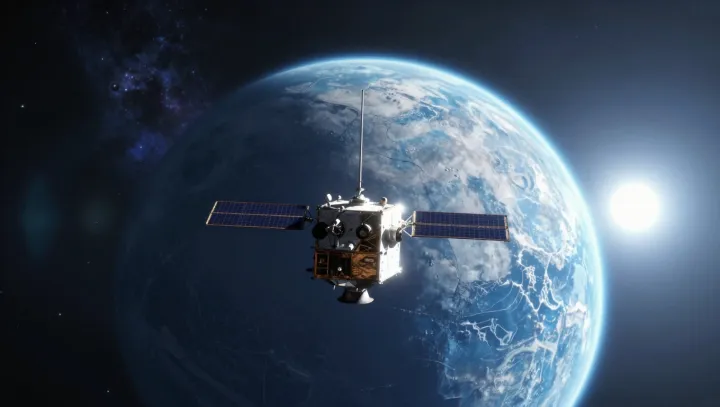
Weak light sounds like a mission killer; engineers treat it as a design constraint. At several astronomical units from the Sun, solar irradiance drops to a small fraction of that at Earth, so a probe survives only by turning area and efficiency into its main instruments. Oversized solar arrays, sometimes spanning lengths larger than the spacecraft bus by many factors, harvest every available photon using high-efficiency triple-junction photovoltaic cells tuned for the Sun’s spectrum in vacuum.
Power hunger is the real enemy, not darkness itself. Avionics, reaction wheels, and communications are forced onto a strict energy diet, with low-power electronics, aggressive duty cycling, and strategic hibernation cutting demand to tens or even single digits of watts. Maximum power point tracking and high-ratio power conditioning units squeeze extra usable current from weak flux, while batteries smooth short eclipses and pointing maneuvers that tilt arrays away from the Sun.
Cold is oversold as a threat; it is a parameter to be budgeted. With radiative heat loss dominating, thermal engineers treat the faint solar input as a modest but predictable heater, surrounding the spacecraft with multilayer insulation and using electric survival heaters only where absolutely required. The probe becomes a slow, self-regulating system, trading surplus power and limited warmth against science operations as it drifts through the dim outer reaches.