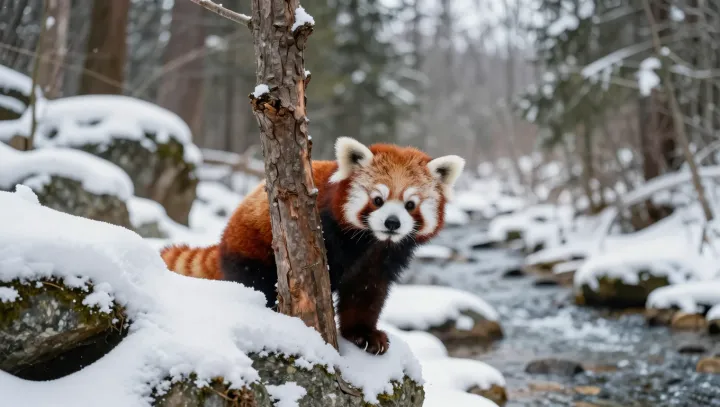
That exposed trunk looks like a mistake. For a slow, tree‑hugging red panda, it is strategy. Clinging above icy water, the animal is trading comfort for a narrow survival margin, matching its own physics to a hostile patch of forest.
The risky perch works because red panda fur cheats the cold. Guard hairs trap a boundary layer of air, while dense underfur boosts thermal insulation and limits conductive heat loss to the bark. By wrapping its body tight to the trunk, the animal shrinks its effective surface area, slowing radiative cooling the way a curled cat does, yet with a far higher fur‑to‑mass ratio that drops its metabolic rate and spares precious fat reserves.
Predators make the choice even sharper. Open snowfields expose tracks and silhouettes; low branches invite ambush from above. A narrow trunk over frigid water creates a clumsy approach route, forcing larger carnivores into awkward balance where a slip is costly. The red panda’s semi‑retractable claws and flexible ankles, built for arboreal locomotion, give it a grip advantage on this awkward axis, turning a seemingly miserable spot into a functional refuge that is not best, only just good enough.