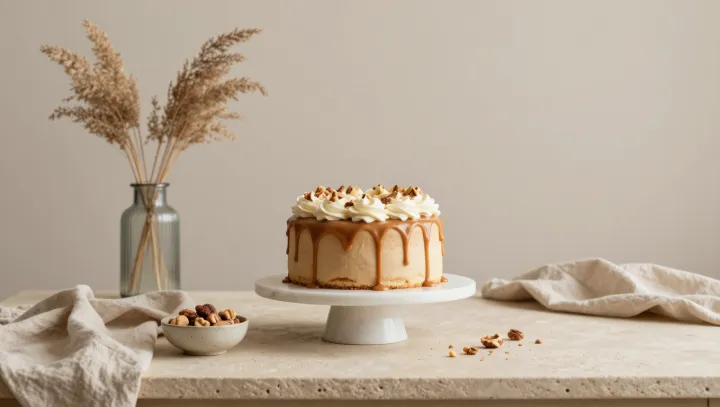
Caramel drizzle on a cake does more than decorate the plate. It edits flavor. Under controlled tasting, researchers report that identical cake samples can be rated up to ten percent sweeter when topped with glossy caramel and framed by warm, rustic styling instead of a plain, clinical setting.
The real driver, some sensory scientists argue, is visual priming. Before sucrose even hits the tongue, the visual cortex and orbitofrontal cortex start predicting sweetness intensity, and those predictions bias how taste receptor signals are interpreted. Warm color temperature, wood textures, and thick caramel patterns all act as learned cues for high sugar load, so the integrated signal in multisensory regions is weighted toward “sweet,” even when the actual glucose concentration is fixed.
This is not simple mood enhancement; it is a measurable shift in psychophysical thresholds. When the same cake is plated on cool white porcelain under bluish light, taste ratings drop, even though electrochemical properties of the food remain constant. Food brands quietly leverage this by pairing brown–gold palettes and rustic props with desserts, using visual design as a low-cost way to amplify perceived sweetness while keeping the ingredient list unchanged, an aesthetic nudge that starts working long before the first bite.