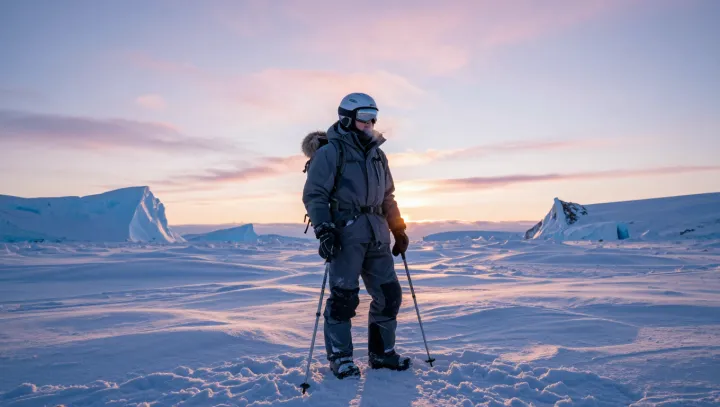
Thin fabric, not a giant coat, often decides who stays warm when wind knives through subzero air. A lightweight shell kills convective heat loss; by blocking airflow, it prevents the rapid stripping of the boundary layer that clings to skin and base layers. Inside that shield, each added layer traps a discrete packet of air, and still air is the real insulation. One thick parka creates a single, poorly controlled air volume; multiple layers create stratified microclimates that slow heat transfer by conduction and convection with far more precision.
More counterintuitive is that staying dry, not just padded, keeps the core safer. A massive parka often sabotages thermoregulation by trapping sweat vapor until it condenses, boosting thermal conductivity of inner fabrics and triggering evaporative cooling. With a thin, breathable shell and a moisture‑wicking base layer exploiting capillary action, water vapor can migrate outward while wind and spindrift stay out. Mid‑layers in fleece or lofted synthetic fill maintain loft even as humidity rises, preserving their thermal resistance, or clo values, instead of collapsing into clammy, conductive bridges to the cold.