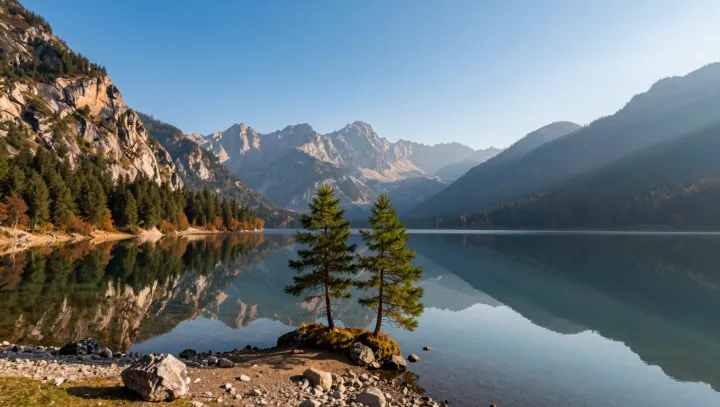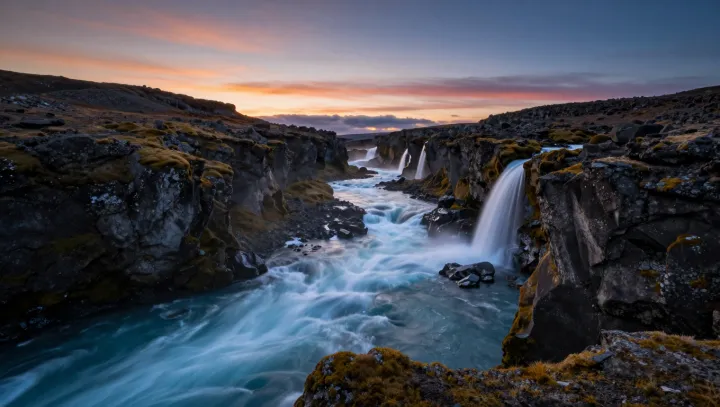
That milky river is not dirty at all. It is an optical trick built from erosion and physics, not pollution. As a glacier grinds its bed, it produces rock flour: particles so small they behave almost like smoke in water, with diameters near the wavelength of visible light. Packed into meltwater, this suspension turns the river into a liquid diffuser, bouncing light in every direction instead of letting it pass straight through.
The odd part is that such bland ingredients, just water and ground rock, can hijack the color wheel. In this slurry, Mie scattering dominates for larger grains while Rayleigh‑like scattering emerges from the finest fraction, so shorter blue and green wavelengths are scattered back toward your eyes more efficiently than reds. When the concentration is high, multiple scattering events wash out detail and contrast, giving that opaque, spilled‑milk look; when it is lower and the underlying water absorbs reds, the channel tips toward unreal turquoise or cobalt, like a streak of diluted paint.
Appearance hinges on a few quiet variables. Particle size distribution, mineral composition such as quartz versus carbonate, and path length of light through the water column all shift the balance between absorption and scattering. Add a cloudy sky and the river glows softly; add dark bedrock beneath clear but still sediment‑rich flow and the blue deepens. What seems like a simple mountain stream is, in effect, a natural spectrometer hiding in plain sight.