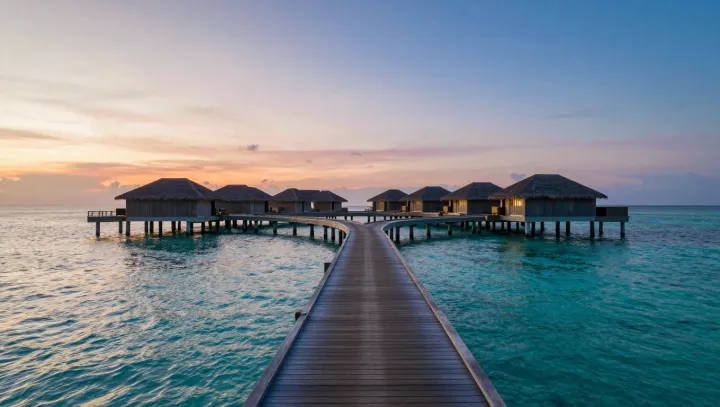
Those postcard villas are less romantic retreat than disciplined marine structure. Beneath each deck, a forest of piles works like a rigid tripod field, forcing gravity and waves into predictable load paths that structural engineers can actually calculate. Most resorts drive reinforced concrete or steel piles into dense seabed layers, relying on skin friction and end bearing, then lock timber or composite decks to that fixed frame so the cute bungalow never really “floats” at all.
The real enemy is not waves; it is salt. To slow that chemical assault, designers specify low‑permeability concrete and heavy concrete cover over rebar, then add epoxy‑coated reinforcement or cathodic protection so corrosion cells never fully form. Where steel remains exposed, zinc anodes are bolted on as sacrificial metal, intentionally corroding first and buying the main structure time, much like a fuse protects an electrical circuit through controlled failure.
Rot, oddly, is treated as a consumable. Visible timber is often pressure‑treated, elevated for ventilation, and detailed so joints shed water, but it is still chosen with the expectation of replacement on a maintenance cycle. Wave loading and storm surge are handled by freeboard, lateral bracing, and hydrodynamic analysis, so decks sit above typical wave crests while cross‑bracing resists uplift and impact. Paradise stays photogenic because engineers assume decay, then design a system that quietly budgets for it.