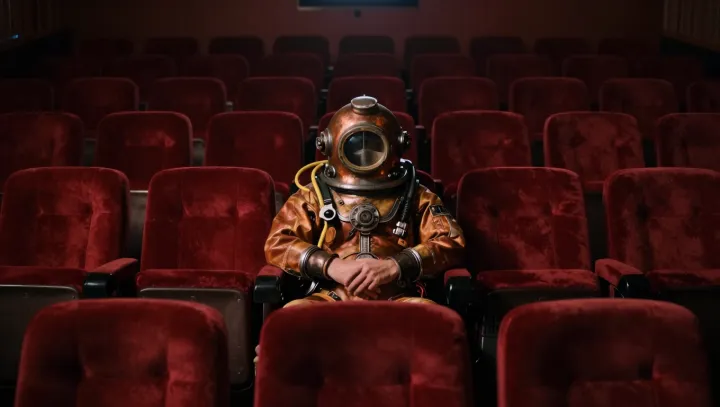
An empty cinema can sound louder than any disaster blockbuster. On the screen, a lone diver hangs in open water, no ship, no shark, no swelling score, just the faint hiss of a regulator and the low hum of distant machinery. That absence is not poetic mood; marine biologists describe a measurable drop in biological noise in many coastal soundscapes, as coral reefs bleach, fish populations fall and invertebrate clicks fade from hydrophone recordings.
The real warning here is that silence used to be fiction. Healthy reefs register as acoustic storms, a dense field of snapping shrimp, grazing parrotfish and crackling algae, what researchers in acoustic ecology treat as a proxy for biodiversity and trophic complexity. When a director strips the soundtrack down to one diver’s breath, the scene stops imitating nature and starts mirroring degraded monitoring data, the same spectral plots that show once-chaotic frequencies thinning into static.
Spectacular tsunamis and burning cities feel oddly reassuring. They promise a visible enemy, a sudden rupture, a hero’s arc. The diver offers none of that. Just time. Just water. Just a body suspended in a column that should be roaring with life yet plays like a muted channel. That mismatch between what the ocean should sound like and what the theater delivers is the sharper alarm, because it suggests the catastrophe has already slipped past the moment for spectacle.