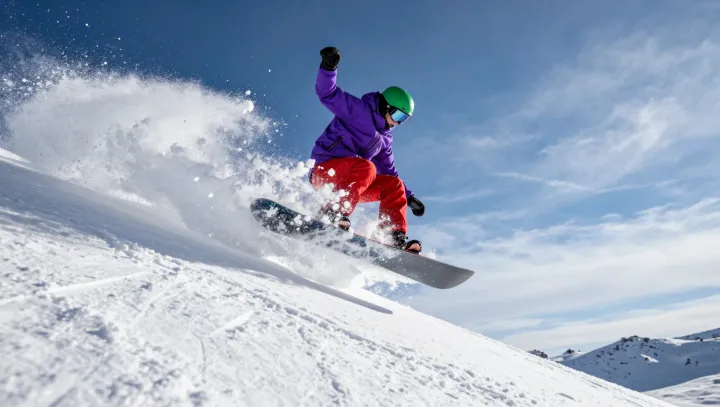
Wood scraping over snow writes a blunt truth first. Skiing never really left survival behind; it just disguised it with carbon fiber and bib numbers. Early hunters used long planks to float over deep snow, extending stride length and lowering ground pressure, a simple hack of friction and body mechanics that meant food or famine.
Elite racing now turns that same physics into a laboratory contest. Tiny variations in sidecut radius, camber profile and torsional stiffness decide how efficiently kinetic energy is carried through a turn. Engineers model contact patches and shear forces; coaches stare at split times that differ by the blink between two heartbeats. The prey is gone, but the chase is sharper.
The real surprise is how invisible the new weapons are. Beneath the athlete, base materials shift from plain wood to sintered polyethylene infused with graphite, tuned for specific snow crystal structures and humidity. On top of that, wax chemists run controlled phase transitions and surface energy games, building fluorine free blends that manipulate boundary layer water into a near frictionless film.
All this turns a hill of snow into a quiet engineering test bench. Hunters once trusted instinct and leg strength; racers now lean on computational fluid dynamics, force plate data and high speed cameras. Victory shrinks to hundredths of a second, yet it still hangs on the same bargain as it did for those first hunters on crude boards. Glide far. Spend less energy. Reach the line before anything else does.