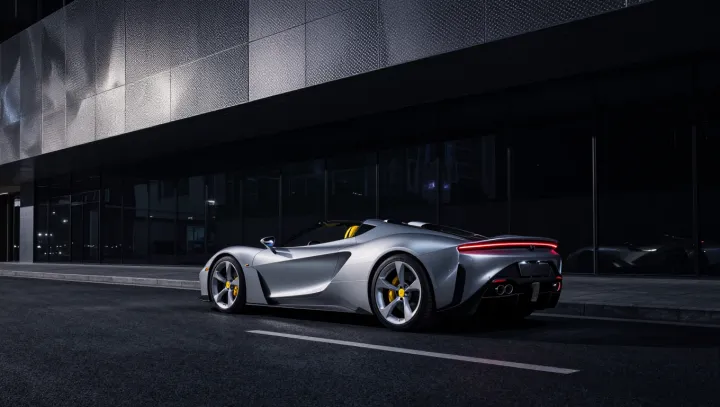
The missing seat is the whole point. Ferrari did not forget the passenger; it exiled them to make a statement that driving, in this car, is a one‑person ritual. By cutting the cabin in half and shaping the body around a single human, the Monza SP1 becomes less a grand tourer and more a sanctioned outlaw, a road‑legal echo of a prototype racer.
This is not just drama. With one seat, Ferrari can tighten the frontal area, refine laminar flow over the hood and channel air into that sculpted air deflector like a controlled pressure experiment, raising comfort at speed without a windshield. The asymmetry also lets engineers bias mass toward the driver, tuning yaw behavior and steering response in ways a symmetrical two‑seater would dilute. Every kilogram saved in structure, restraints and trim becomes an argument for sharper power‑to‑weight and more violent acceleration.
Yet the harder edge hides a softer calculation. By referencing single‑seater barchetta racers and enforcing solitude, Ferrari builds a brand moat around the idea that some experiences are non‑transferable, even in a luxury market obsessed with sharing. The SP1 sells scarcity twice over: in production numbers and in social access. One seat, one story, one ego in the airflow.