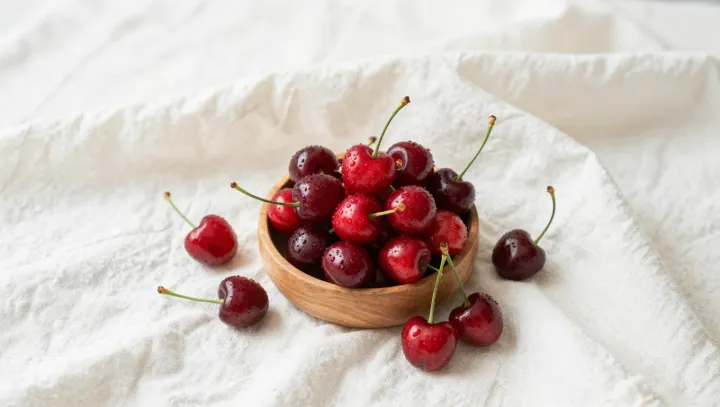
Color, in cherries, is mostly about restraint, not excess. The dramatic spread from near black skins to translucent yellow flesh tracks a single biochemical route: the anthocyanin pathway, a chain of enzymes that builds red to purple pigments from basic flavonoid precursors inside vacuoles. What varies wildly is not the machinery itself but the regulatory code sitting just upstream, the short DNA regions and transcription factors that decide when and where those pigment genes wake up.
It is the subtlety of these switches that makes the fruit so visually diverse. A mutation in a promoter sequence, or a tweak in a MYB transcription factor that normally binds that promoter, can cut anthocyanin production to a whisper in one cultivar while driving heavy accumulation in another. Some varieties carry loss-of-function alleles that almost silence the biosynthetic genes in the skin, leaving yellow or blush fruits, while others show copy-number changes or altered expression timing that load cells with pigment until they appear almost black.
Breeders treat this as a highly editable dial rather than a new system to invent each time. By tracking molecular markers linked to key regulatory loci, they can select seedlings with intermediate anthocyanin expression, creating gradients of red, bicolor patterns, or deeply pigmented lines with enhanced antioxidant capacity. What looks like a broad palette in markets is, at the level of plant genetics, a narrow pathway run through many finely tuned switches.