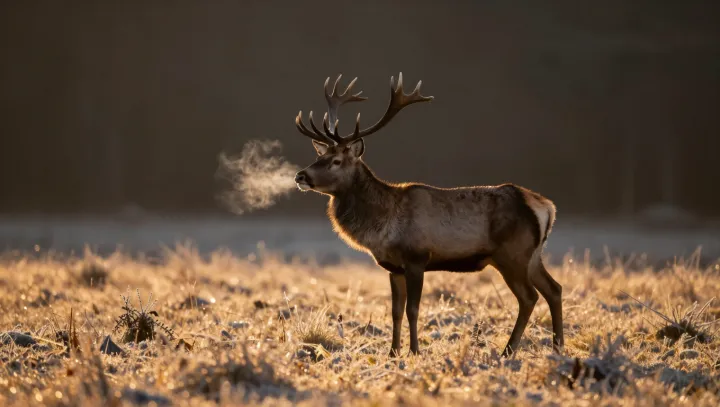
Size, for red deer, is not a vanity metric but an arms race written into bone. Massive antlers and heavy frames are products of sexual selection, where males that win brutal rutting contests gain disproportionate access to mates and pass on genes for larger bodies, thicker cortical bone and stronger neck musculature. In rich temperate habitats, abundant forage and efficient rumen fermentation let these deer carry that bulk without starving, pushing them toward the upper limit of what a cursorial herbivore can sustain.
Yet dominance is not enough; predators keep the bill. Large carnivores target the slow and the careless, so selection favors red deer that keep cursorial locomotion and rapid acceleration even as body mass climbs. Long distal limb segments, elastic tendons and high aerobic capacity lock them into a flight strategy, not a stand-and-fight one. Their morphology is a compromise: big enough for mating contests and winter fat reserves, but light and springy enough to zigzag through forests and across open hills before a predator can close the gap.
The real surprise is how social structure polices this balance. Harem systems and lek-like gatherings reward showy size in males, yet mixed-age herds demand coordination and fast group responses, punishing extremes that would turn a stag into a lumbering outlier. Ecologists read this as stabilizing selection: natural selection and sexual selection pulling in opposite directions, fixing red deer just below the moose on the size ladder, yet firmly on the side of speed when danger appears on the skyline.