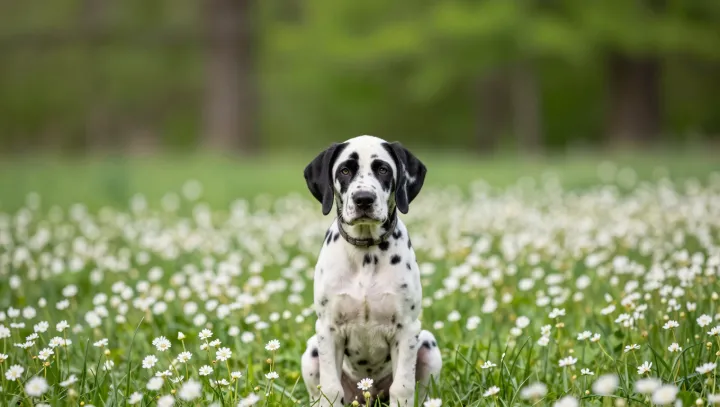
A speckled muzzle close to the dirt is not cute at all; it is a precision instrument at work. Where a human nose registers nothing, a spotted dog’s snout is busy sorting hundreds of airborne molecules, layering them like colored bands across the ground in a map only its brain can read.
The blunt truth is that human smell hardware is underpowered. Dogs carry far more olfactory receptors, packed into folded nasal turbinates that create a massive surface for odorant binding, and this dense sensor array feeds into an enlarged olfactory bulb that dedicates far more neural real estate to decoding scent patterns.
More striking is how structured the process is. Each sniff splits into separate inhalation and exhalation paths, with exhaled air vented through side slits that push fresh odorants toward the nostrils, and left and right nasal passages sample slightly different plumes, giving dogs stereo smelling that fixes where a smell stripe begins and fades.
What feels almost mystical is simply high-resolution signal processing. Slow ground tracking lets odor gradients stabilize along the moist nose and mucus layer, where individual compounds separate by volatility and solubility, and the brain fuses those gradients into a continuous, banded picture that might as well be a rainbow, even though the colors exist only in scent space.