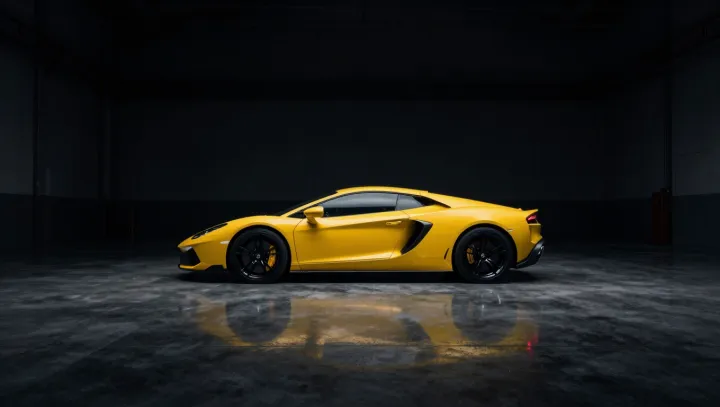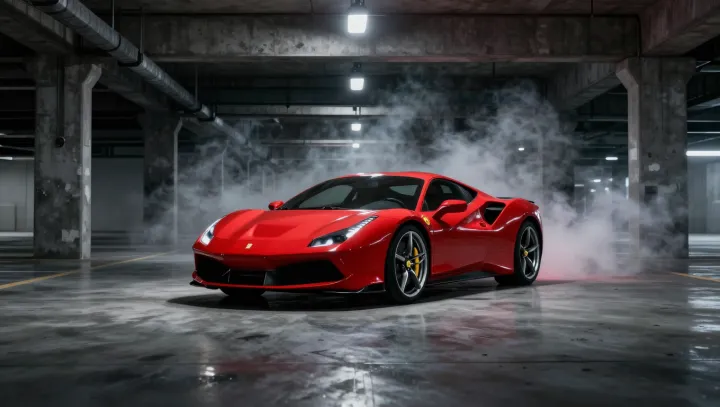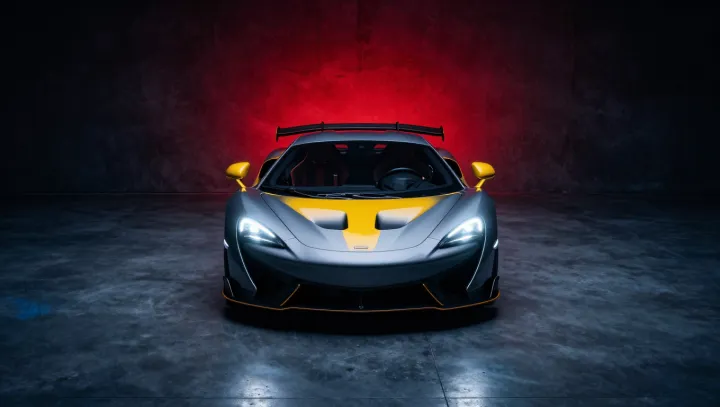
Ferrari treats gravity less as a limit than as a design brief. The brand’s most extreme limited‑run models chase a single target: generate vertical load greater than the car’s own mass at high speed, yet stay legal on public roads and manageable by non‑professional drivers.
The trick is not magic but pressure management. Under the body, sculpted tunnels act as a controlled Venturi system, exploiting Bernoulli’s principle to accelerate airflow and drop static pressure, so the car is pulled down without resorting to absurd wings. On top, splitters, diffusers and vortex generators are tuned with computational fluid dynamics and wind‑tunnel testing to keep the center of pressure aligned with the center of gravity, avoiding sudden balance shifts that would spook any driver.
Pure race‑car numbers would be unsafe on a highway, so restraint becomes engineering, not marketing. Active aerodynamic elements trim attack angles and open bleed channels as speed rises, capping downforce to protect tires, suspension links and the human neck from excessive normal load. Electronic stability control and torque vectoring then translate that vertical grip into predictable lateral acceleration, so the car can exploit more than its own weight in downforce without feeling like a physics experiment about to fail.