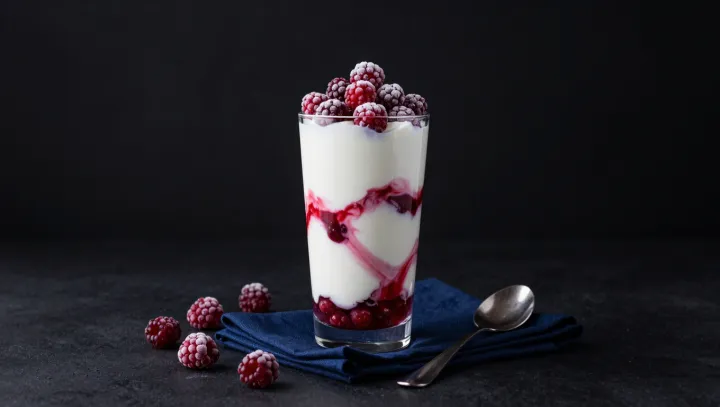
The sweeter bite often belongs to the frozen berry, not the thawed one, and that feels like a cheat. Sugar content stays constant; a freezer does not smuggle in sucrose. What changes is how your nervous system reads the same chemical signal when temperature, texture, and aroma are all quietly rewired by ice.
Cold first bullies acidity. Sour taste relies on hydrogen ions and ion channels in taste receptor cells; at low temperature, those channels fire less, so raspberry tartness drops. Less acid, same glucose and fructose, so your brain rebalances the mixture and tags it as sweeter. That is sensory contrast, not extra sugar.
Texture then rigs the game. When raspberries freeze, ice crystals rupture cell walls and alter pectin structure, turning the fruit into a firmer, icier matrix. Eaten rock solid, it melts slowly on the tongue, delivering sugars in a tighter, more focused plume of juice. Thawed, the same damage leaks water, dilutes surface sugars, and creates a slushy mouthfeel that blurs sweetness and highlights watery, oxidized notes.
Aroma finally loses its vote. Volatile compounds that shout “raspberry” do not evaporate well at low temperature, so the brain gets less aroma data and leans harder on taste and basic trigeminal cues. With sourness muted and fragrance damped, the signal that remains feels simple, direct, almost candy like. The chemistry is static; perception is not.