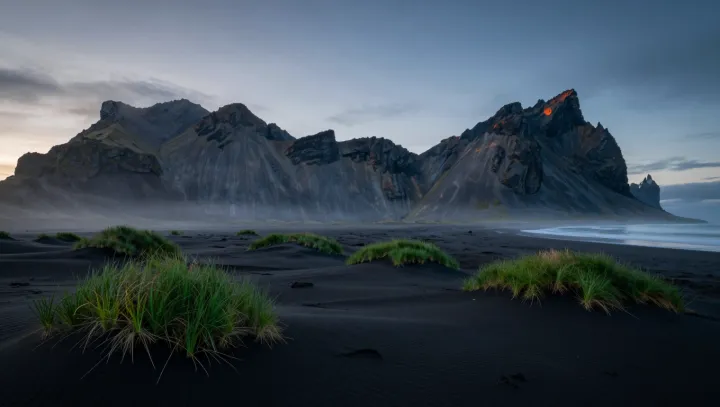
That motionless white giant is not still at all. Beneath the ice cap, rock is flexing, cracking, inching upward as tectonic plate compression and crustal thickening force material toward the sky. The apparent calm is simply too slow for human eyes; instruments record steady uplift measured in millimeters, yet the stress field inside the mountain is intense.
More paradoxical is the way weight makes it rise. A massive glacier loads the lithosphere, pushing the crust downward, while the ductile mantle flows away. As the ice slowly thins through sublimation and melt, isostatic rebound kicks in, and the mountain surface creeps upward like a released spring. Gravity, which seems to pin it down, is actually helping reset the crust and drive vertical motion.
Violent, too, is the work of the ice itself. Glacial abrasion and plucking grind bedrock, carve cirques and deep troughs, and feed constant rockfall onto the flanks. Seismic sensors pick up frequent microquakes from brittle failure along fractures and from glacial slip. From a distance the summit looks frozen and lifeless; underfoot it behaves more like a slow, grinding machine built from stone and moving water.