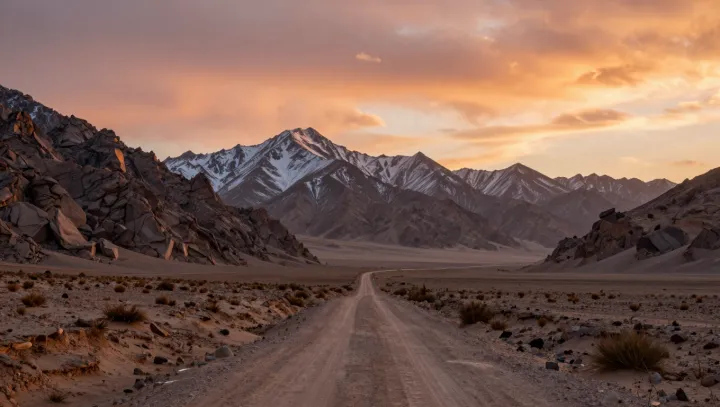
Shadows, not storms, decide which scraps of snow outlast everything else on desert peaks. A narrow gully, a steep north face, a rock overhang: these simple shapes carve out pockets where sunlight rarely lands and where energy budgets tilt toward survival rather than melt.
The counterintuitive part is that extreme dryness helps. In thin, arid air, incoming solar radiation is strong, yet longwave radiation from the atmosphere is weak, so shaded snow loses heat efficiently to the sky. Add high surface albedo from fresh or refrozen grains, and absorbed shortwave radiation plummets, keeping temperatures at the snow–air interface pinned near the freezing point while nearby bare rock bakes.
Equally important is geometry. Local slope angle and aspect determine solar incidence, and for many desert ranges there are orientations that almost never face direct Sun. Inside these shadow corridors, katabatic drainage of cold, dense air forms a shallow inversion layer that hugs the snow streak, suppressing turbulent heat flux and slowing sublimation, even where precipitation totals are negligible.
Calling these features dead relics misses their precision. They are micro‑glaciers run on tight energy accounting, where net radiation, sensible heat flux and latent heat flux balance just enough in favor of ice. Shift the shadow line by a few degrees, or roughen the surface to lower albedo, and the last white thread on the ridge simply vanishes.