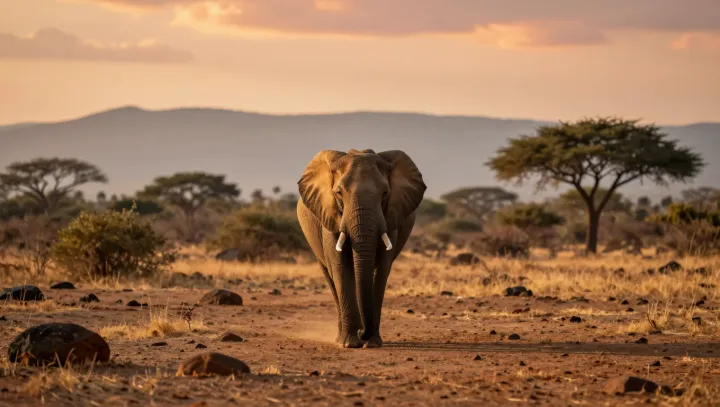
Soft soil should swallow a baby elephant. Physics says so. Yet a calf as heavy as a compact car walks across the savanna and the ground barely dimples. The trick sits in the foot, a structure closer to a biological snowshoe than a simple pillar, and in a gait tuned to spread force over both space and time.
Key is pressure, not weight. Each foot hides a thick fatty pad and a semi floating heel bone, the calcaneus, that together expand under load and distribute force across a wide area, cutting ground pressure to levels closer to a large cow than a car tire. Around this pad, a ring of small bones and dense connective tissue forms a compliant arch, so the foot deforms in three dimensions instead of punching straight down.
Joint protection is even more radical. Long elastic tendons act like suspension cables, storing strain energy with each step and releasing it as the leg swings forward, a process studied as elastic recoil in locomotor biomechanics. That system keeps peak stress off articular cartilage and subchondral bone, while a slightly crouched limb posture and slow, inverted pendulum gait flatten impact spikes that would shatter stiffer joints.
So the calf looks heavy. The physics is light. Every step is a controlled, rolling contact, a brief negotiation between mass, tissue elasticity and soil that ends not with a crater, but with a barely visible print.