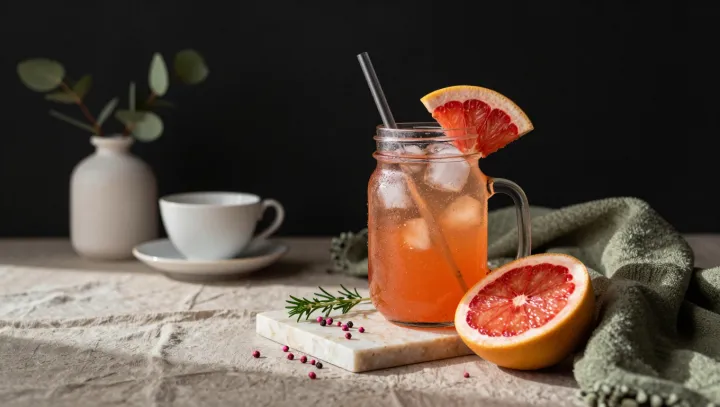
The fruit is a patient liar. At dusk, a blood orange can look merely orange, its peel and flesh holding a genetic capacity that daylight alone will not cash out. The red is withheld. When nights turn cool while days remain bright, cells begin accumulating anthocyanins, water-soluble flavonoid pigments stored in vacuoles, and the familiar citrus color gives way to wine-dark streaks.
Cold is not decoration; it is instruction. The cue is not frost. Low nighttime temperatures can increase expression of genes in the phenylpropanoid pathway, including chalcone synthase and UDP-glucose:flavonoid 3-O-glucosyltransferase, while ripening supplies sugars and precursors; in responsive cultivars, cyanidin derivatives then accumulate in peel and pulp. These enzymes channel phenolic intermediates toward stable glycosylated pigments. Warm nights can leave that molecular machinery quiet.
This is a climate bargain, not a cosmetic trick. Variety matters too. Blood-orange cultivars carry the biochemical hardware, but their color remains unreliable where nocturnal warmth persists; growers seeking richly pigmented fruit need sites with cool nights, sufficient daytime warmth, and fruit left long enough for ripening. Orchards with mild nights may harvest sweet fruit that never develops the same interior red. The apparent concealment is not a secret compartment under the peel. It is conditional gene regulation, with temperature acting as the switch and the vacuole as the final archive. Its color is less a birthmark than a seasonal verdict, written after sunset.