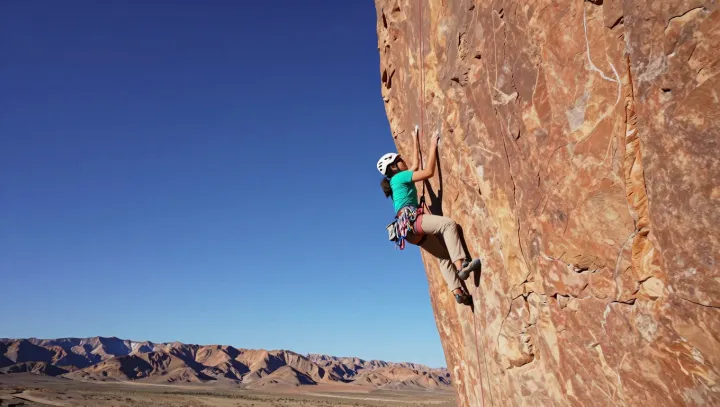
The smallest edge decides. When shoe rubber meets a wrinkle of stone, an elite climber seeks a quiet, loaded contact before pulling hard, because a toe placed millimeters off line shifts the center of pressure beyond the usable part of the hold. Arms merely follow. That contact sends force through bone and shoe rather than into a frantic correction.
Strength is often overrated. With hips held close to the wall, a climber can stack the skeleton so that the legs bear much of the load, while poor foot placement creates a longer lever arm and raises shoulder torque. Physics collects the bill. The friction cone sets the allowable direction of force: push too sideways, and even powerful hands cannot prevent a slip. Legs bring the reserve. Rarely is upper-body force the cheaper answer, because leg muscles have greater cross-sectional area and can sustain repeated loading when the shoe transmits force without rolling.
Good climbers buy time. Proprioception lets them sense pressure through the shoe, then adjust ankle angle and weight distribution before a hold fails; that economy delays forearm fatigue, which often ends a sequence before raw strength does. Precision changes the wager. Instead of treating stone as a contest of biceps, they make it a chain of small balances, each one reducing unnecessary contraction in the fingers and shoulders. Stillness is not weakness. At the wall's quietest moment, the feet have settled an argument the hands would otherwise be forced to fight.