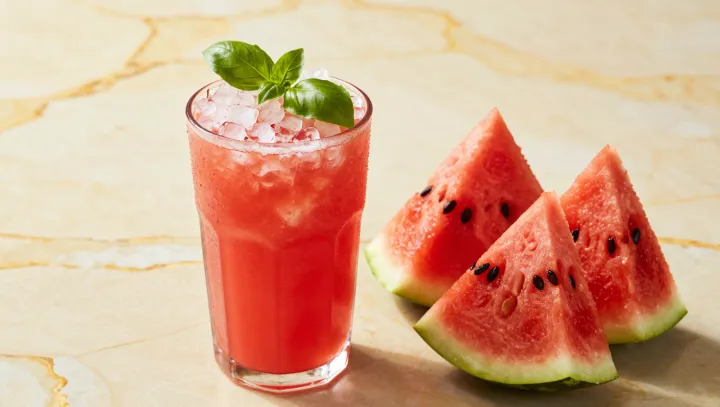
That bright glass is a bargain with your appetite. Juice can taste like fruit's cleanest promise, yet a serving may deliver sugar on the same scale as soda while leaving much of the fruit's fiber behind. You get the sweetness. The structure is gone. Pressing and filtering free the liquid from the pulp that made eating an orange slower.
The swap matters more than the label admits. Whole fruit requires mastication, and its intact cell walls plus soluble and insoluble fiber add bulk, which can slow gastric emptying and soften the glycemic response. Juice arrives faster. Even when it carries vitamins and plant compounds, it usually asks less chewing and produces less satiety. Your body is not grading ingredients by their origin story; it is responding to dose, form, and speed. Portion size also plays a quiet role: liquid is easy to finish before your brain has registered the meal.
Do not treat juice as poison. Treat it as a sweet drink with a fruit connection, not as a stand-in for the fruit bowl. The distinction gets buried when cartons borrow the halo of orchards and breakfast. That is the sales trick: sweetness gets the health costume. You deserve the distinction. Keep whole fruit in the daily rotation, and let juice be occasional or modest when you want it. You can enjoy both. But if the choice is juice versus an apple, what are you really buying: convenience, or fullness?