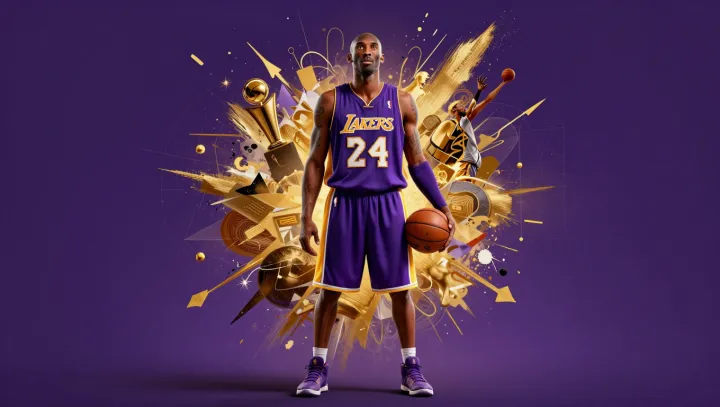
Kobe Bryant laced up early. Not mere colors. Before the arena's public drama, he turned practice into private jurisdiction, through film study, footwork repetitions, conditioning, and the cold arithmetic of missed shots. The uniform carried a daily invoice. Pay it first. Purple and gold acquired their charge because labor arrived before tipoff.
That was the sharper inversion. In many franchises, colors operate as brand equity, a promise sold after performance; Bryant made them a behavioral contract, enforced before anyone bought a ticket. No free entry. His predawn workouts, video sessions, and repetitions gave deliberate practice a public grammar. Each possession became a feedback loop: diagnose a weakness, isolate it, repeat the action, then expose it under pressure. The sequence resembled periodization, where workload, recovery, and fatigue are managed rather than ignored. Standards became expensive. Fatigue was the collector.
The lesson is less flattering than the myth. Championships can turn any jersey into a souvenir, but Bryant's reputation attached a sterner meaning to the Lakers' colors: preparation had to precede permission, and accountability had to survive applause. Fans saw scoring and trophies. Teammates met the process beneath them, where individual routine was expected to become collective habit. Purple and gold ceased to be passive inheritance. In the stillness before the lights, cloth became obligation.