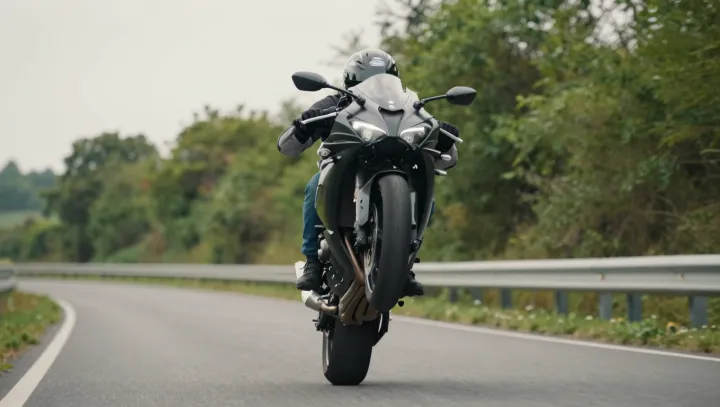
Muscle memory, not horsepower, decides who walks away when a motorcycle loses grip. Veteran riders talk less about gear and more about how to train the brain so that, in the split second when tires slide, the right move fires before panic does.
The first habit is drilling one or two escape actions until they become procedural memory. Instead of a dozen clever maneuvers, riders rehearse a single bias: straighten, brake in a line, then steer. By reducing cognitive load and exploiting conditioned reflex arcs, they give the nervous system one clean script to run when traction vanishes.
The second habit is treating attention like a lens, not a spotlight. Rather than staring at the car ahead, experienced riders expand peripheral vision and constantly track vanishing points, closing gaps and surface changes. This deliberate control of situational awareness and hazard perception buys extra milliseconds of reaction time, a tiny margin that often determines impact speed.
The third habit is rehearsing failure. Instead of imagining perfect rides, veterans visualize lowsides, sudden obstacles and braking errors, then mentally walk through throttle roll-off, body position and slide management. That kind of cognitive preloading, akin to stress inoculation in aviation, means that when the real mistake arrives, the brain treats it as a familiar problem, not an existential shock.