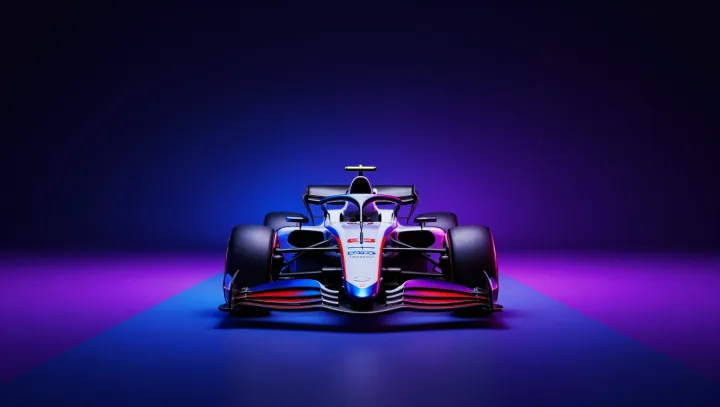
An F1 car does not just drive on the track; it is pressed into it by air. At racing speed, its body and wings work as an inverted aircraft wing, creating aerodynamic downforce instead of lift. The faster the airflow, the greater the pressure difference between the upper and lower surfaces, and the harder the chassis is forced into the asphalt.
This effect starts at the front and rear wings and continues underneath the car. The floor is shaped as a venturi tunnel, exploiting Bernoulli’s principle to accelerate air and lower static pressure under the car. That low-pressure zone acts like a vacuum seal, a controlled form of ground effect, generating a load that can exceed the car’s own weight.
Suspension geometry keeps the ride height in a narrow window where this venturi effect is strongest, while the diffuser at the back manages how the fast underfloor airflow rejoins the slower wake. Mechanical grip from the tyres then converts that vertical load into friction. Combine extreme downforce, optimised ground effect and high-friction rubber, and the physics allow enough normal force that, at speed, the car could theoretically drive upside down without losing contact.