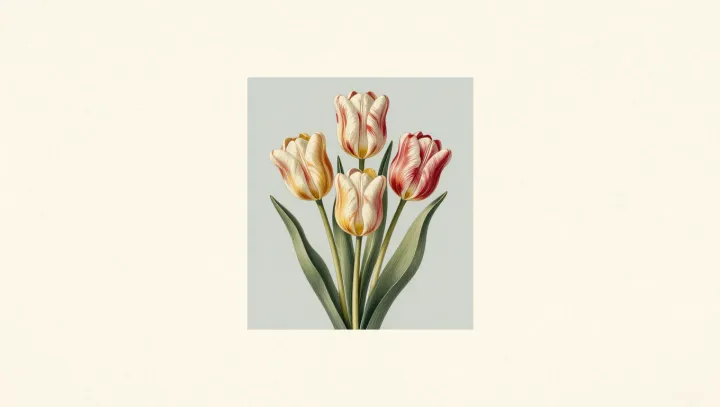
A flower once traded like a rare gemstone now sits in plastic crates at garden centers. The tulip that helped ignite Europe’s famous price bubble became ordinary when horticulture turned a volatile status symbol into a standardized product.
At the height of speculation, the most coveted tulips carried streaked and flamed petals caused by tulip breaking virus, a pathogen that made color patterns unpredictable and supply impossible to scale. That scarcity acted like a runaway marginal effect in a market obsessed with novelty. Modern breeders instead selected genetically stable color patterns, using controlled pollination and clonal propagation to decouple beauty from viral infection. As varieties were fixed, traits such as uniform flowering time and bulb size became as important as visual impact.
Bulb farming then applied something close to industrial process control to a plant once ruled by chance. Advances in soil sterilization, phytosanitary inspection and cold storage logistics reduced biological and transport risk, while global trade networks spread production across regions from Europe to Asia, including large-scale fields in China. As yields rose and unit costs fell, the flower’s symbolic role shifted: no longer a financial instrument, the tulip turned into a mass-market seasonal accent, its value anchored less in rarity and more in reliability at the edge of a lawn.