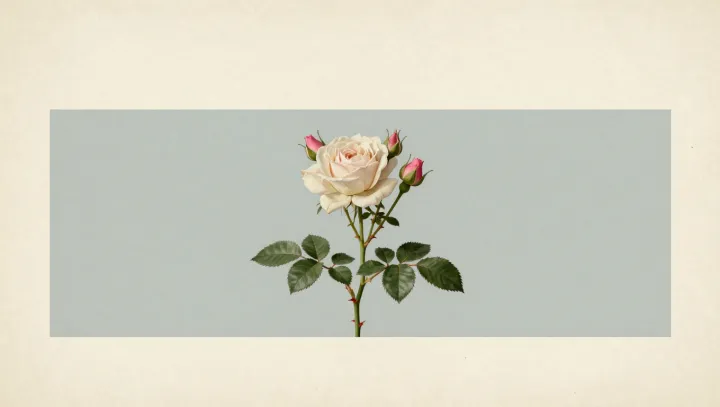
A wiry mountain shrub with sparse pink blooms now underpins one of the most profitable cut flowers on the planet: multi-headed roses that hold dense clusters of buds on a single stem. The transformation traces a long chain of selective breeding focused on flower number, stem strength, and vase life, turning a resilient wild species into a tightly engineered ornamental product.
Early growers first fixed traits that mattered in the field: repeat flowering driven by changes in floral meristem identity, and resistance to common fungal pathogens. As demand shifted to bouquet-ready stems, breeders began to treat each plant like a living supply chain, ranking seedlings by bud density, branching angle, and peduncle strength. Through controlled cross-pollination and line selection, they gradually rewired inflorescence architecture so that what began as scattered single flowers became compact corymb-like clusters.
Modern programs now lean on quantitative trait loci mapping and marker-assisted selection to compress generations of guesswork. By tracking alleles that tune auxin and cytokinin signaling, breeders influence apical dominance and lateral bud break, essentially reallocating the plant’s basic metabolic rate of resources toward many medium buds instead of one large bloom. The result is a stem that behaves like a biological chandelier: dozens of synchronized flower units, opening in waves and holding color and petal integrity long enough to survive transport, retail display, and the final vase.