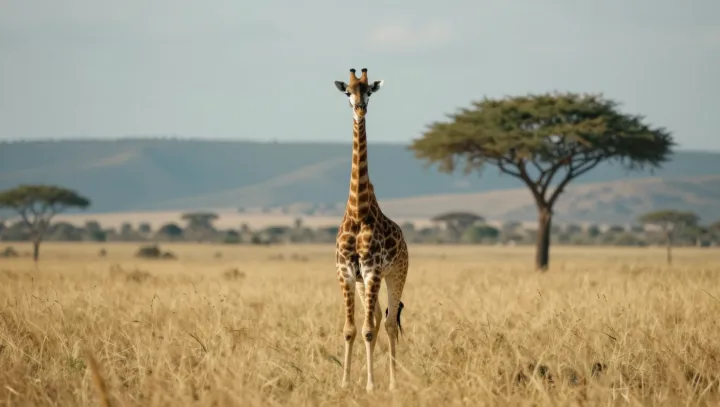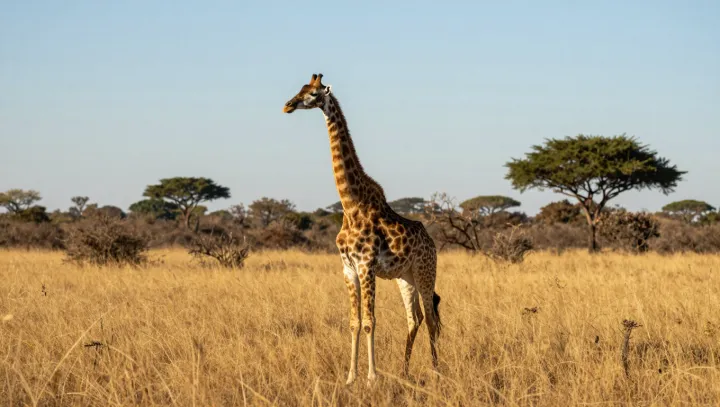
A towering neck that scans half a kilometer of savanna turns into a liability the moment it tilts toward water. The same anatomy that grants a giraffe an early-warning system also sets up a dangerous physiological and behavioral trap.
The core problem is fluid mechanics. A giraffe’s heart must generate arterial blood pressure roughly twice that of many large mammals to push blood up the neck. When the head drops below heart level, gravity reverses the challenge. Without safeguards, blood would surge toward the brain, risking hemorrhage or loss of consciousness. To avoid this, giraffes rely on tight artery walls, a dense capillary bed, and rapid baroreceptor reflex control of vascular resistance. These compensations work, but they are not instantaneous and they are not perfect, so the few seconds around each sip remain a period of physiological instability.
Physics is only half the hazard. Bending to drink forces the giraffe into an awkward spread-legged stance that slows acceleration and narrows its field of view. Eyes shift downward, ears and nostrils close to the water’s surface, and the animal’s usual height advantage against ambush predators vanishes. Waterholes concentrate lions and crocodiles, which learn to exploit this recurring window of vulnerability. Each drink is therefore a brief but sharp convergence of cardiovascular strain and predation risk, built into the very design that makes the giraffe so effective as a long-distance lookout.