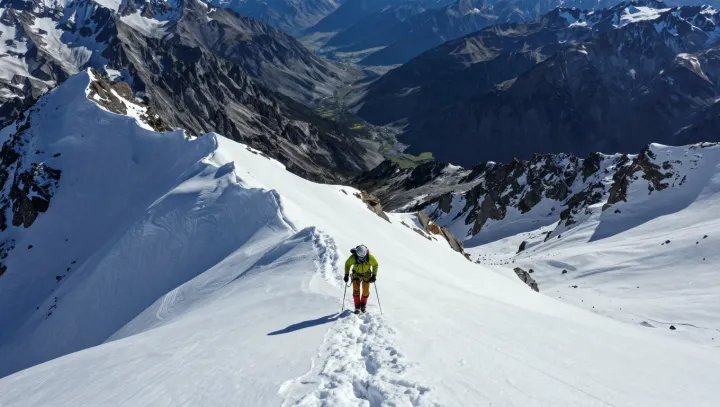
Thin air, not ice or rock, often decides who survives in the death zone. Above a critical elevation, every step becomes a negotiation with physiology, and elite climbers know that speed can push that fragile contract past breaking point.
At extreme altitude, oxygen partial pressure drops so low that the body runs close to its limit just to maintain basal metabolic rate. Move too fast and metabolic demand spikes, but oxygen delivery cannot keep up. The result is rapid lactate accumulation, impaired cerebral perfusion and a steep rise in acute mountain sickness risk. A controlled, almost monotonous pace keeps energy expenditure within a narrow band in which muscles, lungs and heart can still clear carbon dioxide and maintain blood pH.
The brain is just as exposed. Hypoxia erodes the prefrontal cortex, where executive function and risk assessment live. Rushing amplifies this cognitive deficit, turning small route‑finding errors or rope misclips into fatal falls. By deliberately slowing, climbers buy time for micro‑decisions: where to place crampons, how to read snowpack stability, when to turn back. The slow rhythm also reduces entropy in the system of team movement, oxygen logistics and thermal regulation, avoiding chaotic surges that waste limited resources.
Elite mountaineering therefore treats pace as a form of life support, not a test of bravado. On the highest ridges, restraint becomes a survival skill, and the most disciplined climber is often the one who still has enough clarity to descend.