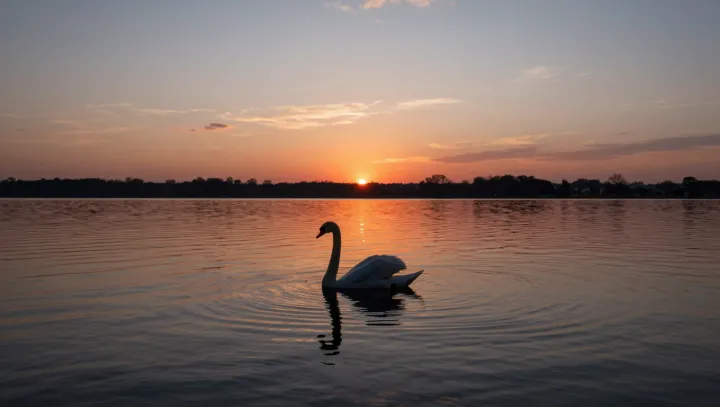
The same bird that glides through misty lakes on greeting cards can drive a human out of the water with a single hit. Swans owe their romantic image to the surface of things: smooth plumage, mirrored pairs, quiet water. Biology tells a different story, in which every feathered gesture is part of a high-stakes territorial campaign.
Swans are large, heavy birds with powerful pectoral muscles and long wingspans; a full-force wing strike can transfer enough momentum to fracture a thin human bone. Their calm silhouette hides a demanding energy budget: maintaining a big body on plant food pushes basal metabolic rate and forces strict control over feeding grounds. Territory becomes a non-negotiable asset, especially during breeding, when parents pour substantial parental investment into eggs and cygnets clustered in exposed nests.
That investment rewires the cost–benefit equation of conflict. Driving off intruders, including much larger mammals, protects not only food access but also genetic payoff, so aggressive displays, chases and physical attacks become routine tools rather than rare outbursts. Seen from this angle, the classic image of two swans forming a heart shape is not just a symbol of romance but a brief armistice in a life organized around defense.