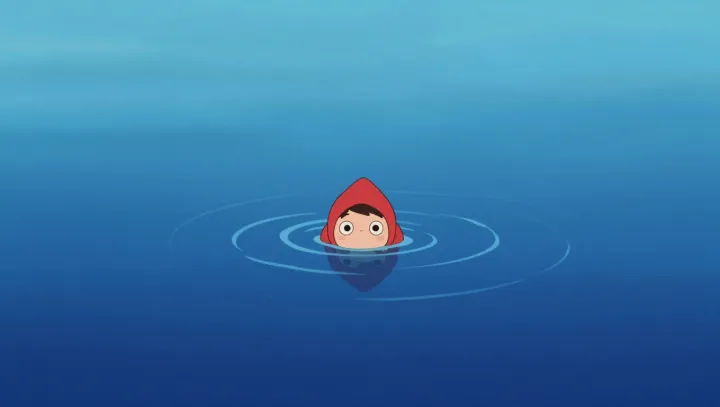
A small coastal town, a flooded street, and a child waiting at a window form a more precise map of parent–child attachment than collapsing planets and galactic wars. “Ponyo” shrinks the canvas so that every emotional micro‑movement is visible, then lets psychology, not spectacle, drive the plot.
Where apocalyptic sci‑fi often treats families as narrative collateral, “Ponyo” builds its entire tension around attachment security and separation anxiety. The film quietly stages textbook dynamics from attachment theory and affect regulation: a caregiver under strain, a child testing proximity, and the nervous system oscillating between arousal and calm. The rising water looks like fantasy, but it functions as a controlled stressor, closer to a laboratory manipulation than a mythic curse, exposing how a child reads a parent’s facial cues as a real‑time risk assessment system.
Domestic routines in “Ponyo” act like repeated trials in a longitudinal study: soup on the table, headlights cutting through rain, the empty seat when the mother leaves. Each cycle updates the child’s internal working model, shifting the marginal effect of every absence or return. By refusing big didactic speeches, the film lets mirror neurons do the narrative work; viewers feel the co‑regulation loop as the child calms only when the adult’s voice, posture, and gaze stabilize. Most disaster epics externalize fear into cities on fire. “Ponyo” keeps the real cataclysm inside a small living room, where one missed promise could redraw a lifetime of trust.