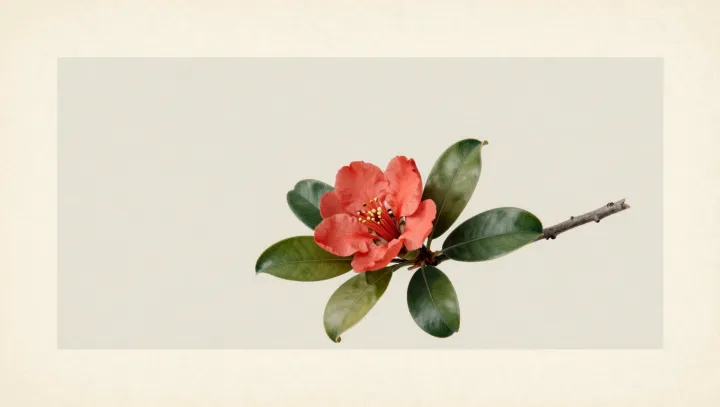
Pale petals opening against bare branches now point to a very different story: the same lineage that once lit up winter gardens in East Asia also underpins the global tea industry. Recent genomic surveys of Camellia species show that ornamental, oilseed and tea varieties share a tight genetic cluster, with commercial tea cultivars nested inside a broader camellia family tree.
By comparing whole‑genome sequences, researchers have mapped how domestication shifted the plant’s evolutionary baseline. Selection pressure did not target showy corollas alone; instead, it repeatedly favored alleles in caffeine biosynthesis and flavonoid metabolic pathways. Genes in the purine alkaloid route, which governs xanthine derivatives such as caffeine, show clear signatures of reduced nucleotide diversity and strong selective sweeps, classic markers in population genetics of a crop pushed toward a specific biochemical output.
Those same analyses reveal trade‑offs that echo basic thermodynamics and entropy increase in agroecosystems: as farmers fixed traits for bitter, stimulating leaves, they narrowed the effective population size of once diverse wild camellias. What began as a winter‑blooming ornament was gradually repurposed into a biochemical platform, turning floral aesthetics into the genetic backbone of an industrial caffeine supply that now reaches far beyond the gardens where those first camellias were admired.