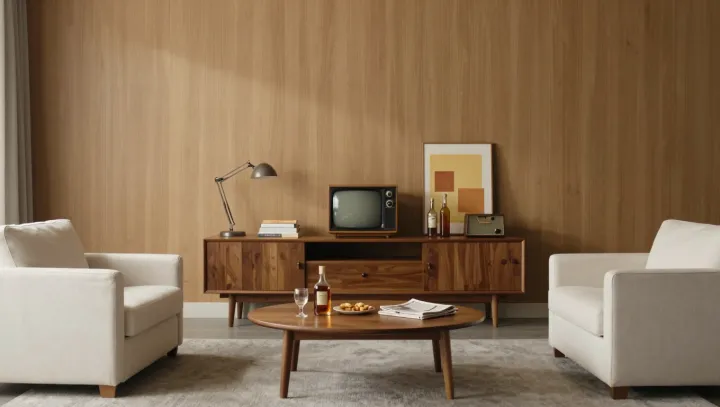
A blank wall where a TV used to sit can quietly rewrite the script of a 15 m² living room. Once the black rectangle disappears, the focal point of the space no longer competes for continuous visual fixation. Furniture can pivot inward, not toward a device, and the room stops behaving like a small private cinema.
Without a TV stand or media console, floor area opens for a foldable dining table or a low, modular desk. The same square meters now support work, study, and shared meals because circulation paths are no longer constrained by a single front-facing viewing axis. Wall space becomes available for shelving, whiteboards, or a pull-down projection screen used only when needed, increasing functional density without adding square footage.
Attention also reallocates. Conversations gravitate to the center, not to a corner screen, which changes the social geometry of the room. A movable reading lamp and a compact bookshelf turn the former TV wall into a reading zone. Lightweight exercise gear can slide into the freed footprint, allowing basic strength training and mobility routines. The physical layout stays almost the same; what shifts is the primary object of attention, and that shift unlocks at least five new roles for the same small room.