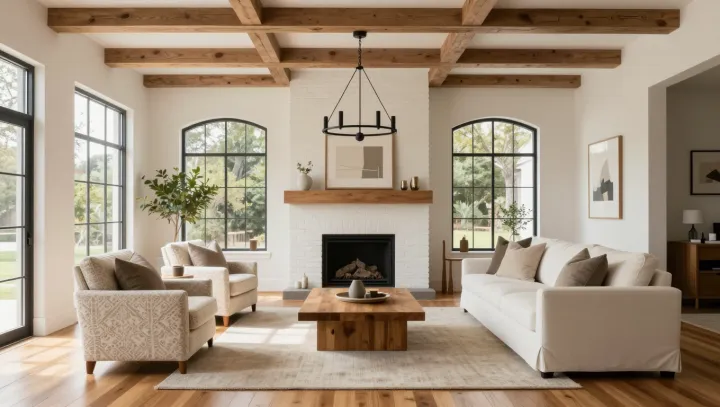
The most comfortable home for the human brain is not the one that wins on social media metrics. Research in environmental psychology suggests that true comfort emerges when a space quietly shrinks the number of choices your mind must process every second. Trendy interiors, packed with contrasting textures and objects, may photograph well but they raise cognitive load and invite constant micro-decisions about what to notice, ignore or adjust.
Psychologists link this to decision fatigue and to basic principles of attentional control. Every open shelf, accent color and decorative object becomes a stimulus that the visual cortex must parse, then route through working memory. That processing draws on limited mental resources, increasing perceived stress and even low-level arousal in the autonomic nervous system. By contrast, simpler layouts, repeated materials and clear storage reduce entropy in the visual field and lower the brain’s ongoing need to prioritize competing stimuli.
This does not mean sterile minimalism. Studies indicate that a small number of personally meaningful objects can support emotional regulation, provided they are easy to locate and not embedded in clutter. The psychologically comfortable home acts like a well-designed interface: it makes default choices for you, so your prefrontal cortex can spend less energy on navigating furniture and decor, and more on rest, relationships and focused work. In the quiet of such spaces, the absence of decisions becomes its own form of luxury.
A lamp’s soft cone on a clear table, a single row of books within effortless reach, a doorway not blocked by visual noise: these are the scenes that rarely go viral yet stay in the mind, long after the scroll has ended.