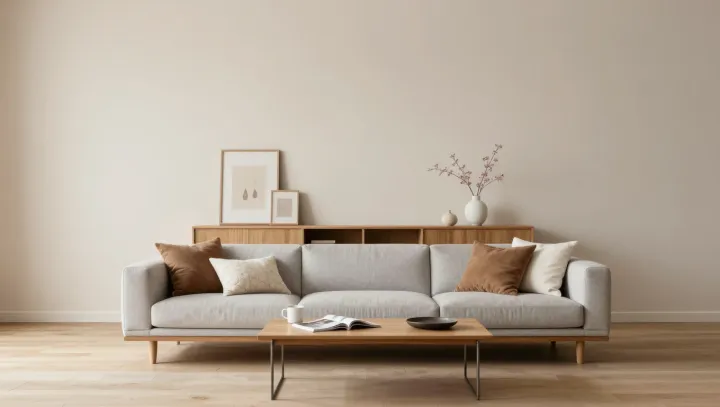
The most polished homes on camera rarely depend on luxury sofas or designer chairs. Instead, they lean on four quiet decisions the lens loves. First comes light control. Diffused natural light, supported by layered artificial lighting, evens out contrast and softens shadows, which flatters both surfaces and skin. Cameras respond to luminance distribution and color temperature far more than to brand labels on furniture.
Next is a disciplined color palette. Creators often keep backgrounds in low-chroma neutrals and reserve saturated color for small accents, which stabilizes white balance and reduces visual noise. Third is negative space. Empty floor and wall areas create clear figure–ground separation, a principle borrowed from Gestalt psychology, so the eye knows instantly where to land. This makes even modest rooms read as calm and intentional rather than crowded.
Finally, visual hierarchy does the heavy lifting. Designers stage one or two focal points per frame, then align lines, textures, and scale to support them, much like managing depth of field in photography. Once these four elements are in place, mid-range furniture often looks more expensive because it sits inside a coherent system. For anyone shooting at home, that system is the real investment.