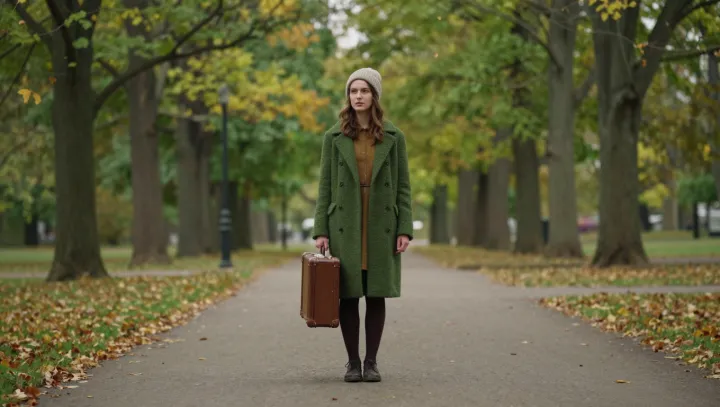
A flash of cobalt against rusted orange cuts through the usual beige fog of fall and winter dressing. What looks like a clash at first glance often reads as harmony once the eye starts to process it, because contrast, not sameness, is what teaches the brain how to read an outfit.
Color theory explains why this works. Hues that sit opposite or sharply apart on the color wheel create a built‑in tension and then resolve it, much like a chord moving from dissonance to consonance. When you pair burgundy with fuchsia, olive with electric blue, or chocolate with chartreuse, each color sharpens the edges of the other instead of letting them blur into a flat block of fabric. The outfit stops being one big mass and turns into a set of deliberate shapes, which the eye intuitively reads as design rather than accident.
Neutrals feel safe partly because they lower the visual volume, but they also flatten depth. In cold‑weather layers, that can make even expensive pieces blend into a single, indistinct slab. High‑contrast combinations, by comparison, outline structure: the lapel of a coat, the line of a trouser, the curve of a boot. They reveal tailoring, create a sense of proportion, and suggest intention. What begins as a clash ends up as a kind of visual editing tool, cutting through the gloom and making every element of an outfit earn its place.